
If you have ever compared SEO agencies, backlink marketplaces, or content publication services, you have probably noticed something confusing: prices can vary enormously. One provider offers backlinks for a few dollars, while another charges hundreds for a single placement. So, what determines the actual link building services cost, and how can businesses decide whether they are getting good value?
The answer is more complicated than simply comparing prices. A backlink is not just a hyperlink. Its potential value depends on the publishing website, editorial context, relevance, placement, and the work involved in securing the publication.
Understanding these differences can help businesses avoid unnecessary expenses while building a more effective long-term SEO strategy.
What Is the Average Link Building Services Cost?
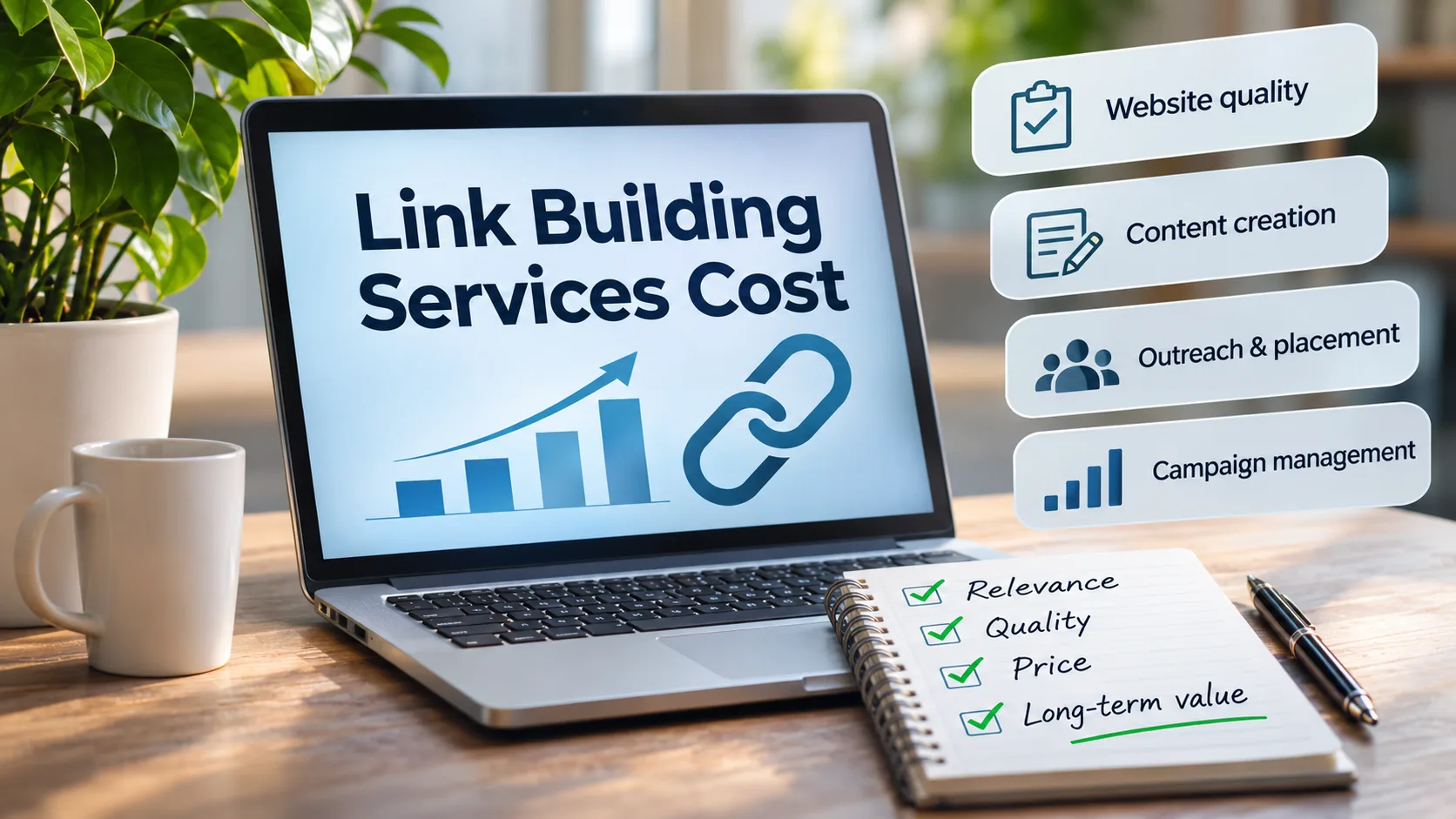
The link building services cost depends primarily on the type of backlinks purchased, the number of publications required, and the level of service provided.
For example, a small business might invest $100–$300 in an initial campaign, while an established company operating in a competitive industry could allocate several thousand dollars per month.
Indicative market price ranges include:
• Budget backlinks: Approximately $5–$30 per placement, often involving automated publishing or websites with limited editorial oversight.
• Standard guest posts: Around $30–$150 per publication, depending on the website and content requirements.
• Premium editorial placements: Approximately $150–$500 or more for publications on established, relevant websites.
• Managed link building campaigns: From several hundred to several thousand dollars monthly, depending on research, outreach, content production, and reporting.
These figures are illustrative rather than fixed industry rates. Actual prices can differ significantly between providers.
The important question is not simply how much a backlink costs. It is what the business receives in exchange.
Why Does Link Building Pricing Vary So Much?
Two backlinks might look almost identical in a report but have completely different characteristics.
Imagine purchasing one backlink for $15 and another for $120. Both appear inside articles, both point to your website, and both use relevant anchor text.
Why the difference?
The more expensive placement might appear on a website with an established audience, stronger editorial standards, and content closely related to your industry. The cheaper option might be published on a general-purpose website containing hundreds of unrelated articles.
Several factors influence link building pricing.
Website Authority and Reputation
SEO professionals frequently evaluate websites using metrics such as Domain Authority (DA), Domain Rating (DR), referring domains, and estimated organic traffic.
These indicators can help compare potential publishers, although none represents an official Google ranking score.
A website with a credible history, relevant content, and a natural backlink profile may command higher publication fees.
Content Quality and Editorial Requirements
Some publishers accept prepared articles, while others require original content written specifically for their audience.
Research, writing, editing, and publication management all contribute to the cost of link building.
A well-written article also offers something beyond the backlink itself: useful information that readers and AI-powered search tools may discover and reference.
Industry Competition
Link building in competitive sectors, such as finance, insurance, legal services, or software, may require more research and publisher outreach.
Specialized websites can be harder to access, and editorial requirements may be stricter.
Consequently, the same campaign structure can have different costs depending on the industry.
Backlink Price vs. Backlink Value: Understanding the Difference
One of the most common mistakes in SEO purchasing is assuming that a higher backlink price automatically means better results.
That is not necessarily true.
A $200 placement on an irrelevant website may offer less practical value than a $60 publication on a smaller, highly relevant industry blog.
Consider a company selling accounting software.
Would it benefit more from appearing in an article about business finance or from receiving a backlink on an unrelated entertainment website?
The answer is usually straightforward.
Relevance matters because it connects the publication with an audience genuinely interested in the subject.
When evaluating the cost of backlinks, businesses should examine:
• The publisher's subject matter and relevance.
• Organic traffic trends and content quality.
• The number and nature of outgoing links.
• Whether the article provides useful information.
• The backlink's placement within the content.
• The publisher's editorial standards and publication history.
No single metric can guarantee SEO performance. A combination of factors provides a more meaningful assessment.
How Much Should a Small Business Spend on Link Building?
There is no universal monthly budget suitable for every website.
A local business targeting a limited geographical area will typically have different requirements from an international e-commerce company competing across multiple countries.
For a smaller business, an initial budget of $100–$500 may be sufficient to test several publication opportunities and evaluate the service.
Larger businesses might allocate $500–$2,000 or more monthly, particularly when campaigns include content creation and ongoing publisher selection.
However, the link building services cost should always be considered alongside other SEO investments.
Technical optimization, website structure, content quality, and user experience remain important. Backlinks cannot compensate for a website that fails to satisfy its visitors.
A balanced strategy usually produces a more sustainable foundation than concentrating the entire marketing budget on link acquisition.
Individual Backlinks or Complete Link Building Packages?
Businesses generally have two purchasing options: selecting individual publications or ordering a complete campaign.
Individual placements provide greater control over publishers, topics, and spending. They can be particularly useful when a company has specific editorial requirements.
Packages, meanwhile, can simplify the process.
Instead of selecting every website separately, the customer chooses a campaign configuration based on the desired scope and budget.
Platforms such as Bzoomer provide access to individual publication opportunities and structured link building campaigns, allowing businesses to compare different approaches without necessarily committing to an expensive agency retainer.
When examining link building prices, it is worth checking exactly what each package includes.
For example, does the quoted amount cover article writing? Are publications included? How many placements will be delivered? Can the customer review the publisher selection?
A transparent breakdown makes it easier to understand the actual value of the service.
Can Affordable Link Building Still Be Effective?
Affordable does not automatically mean poor quality.
Some publishers charge reasonable fees because they have efficient editorial processes, lower operating expenses, or straightforward publication requirements.
Similarly, a marketplace may reduce administrative expenses by connecting advertisers directly with available publication opportunities.
This can influence the overall link building services cost without necessarily reducing the quality of every placement.
However, extremely cheap offers deserve careful examination.
Hundreds of backlinks generated automatically across unrelated websites may create an impressive-looking report without providing meaningful editorial exposure.
Google also considers links created primarily to manipulate search rankings a potential violation of its spam policies, particularly when paid placements are not appropriately qualified.
For this reason, businesses should distinguish legitimate sponsored publication opportunities from promises of guaranteed ranking improvements.
A sensible approach focuses on relevant websites, informative articles, transparent placement conditions, and realistic expectations.
How to Calculate the Real Cost for Link Building
Before choosing a provider, calculate the complete campaign expense rather than looking only at the advertised publication fee.
Suppose a business orders ten articles at $75 each.
The publication budget is $750.
If content creation costs an additional $25 per article, the total increases to $1,000.
Additional services such as publisher research, campaign management, and reporting may increase the final amount further.
The effective cost for link building should therefore include every service necessary to deliver the agreed publications.
Businesses should also consider operational efficiency.
Spending hours contacting publishers, negotiating fees, preparing articles, and monitoring publication status has a real cost, even when those activities are handled internally.
A managed service may be more economical when it reduces the amount of work required from the customer.
Common Mistakes When Comparing Link Building Services
Choosing the cheapest provider without evaluating the publications is one mistake. Choosing the most expensive provider simply because its prices appear premium is another.
Businesses should also avoid treating DA or DR as the only measures of quality.
A publisher with moderate authority but genuine topical relevance may be more appropriate than a high-metric website covering unrelated subjects.
Another common mistake is expecting immediate results.
Search engines must discover and evaluate published content, and ranking changes depend on many factors beyond backlinks.
The link building services cost should therefore be evaluated as part of a broader marketing investment, not as a guaranteed purchase of search engine positions.
Clear expectations, realistic budgets, and consistent monitoring help businesses make better decisions.
Final Thoughts: Finding the Right Balance Between Cost and Quality
The best link building strategy is not necessarily the cheapest or the most expensive.
It is the one that aligns publication quality, business objectives, available resources, and long-term SEO priorities.
Understanding the link building services cost makes it easier to compare offers, identify unnecessary expenses, and choose publication opportunities with greater confidence.
Before purchasing, ask what is included, where the content will appear, whether the publisher is relevant, and how the service fits into your overall marketing strategy.
A carefully planned campaign with a realistic budget is often a better starting point than purchasing large numbers of backlinks without a clear purpose.
Ultimately, successful link building begins with informed decisions about quality, relevance, and value—not simply the lowest advertised price.